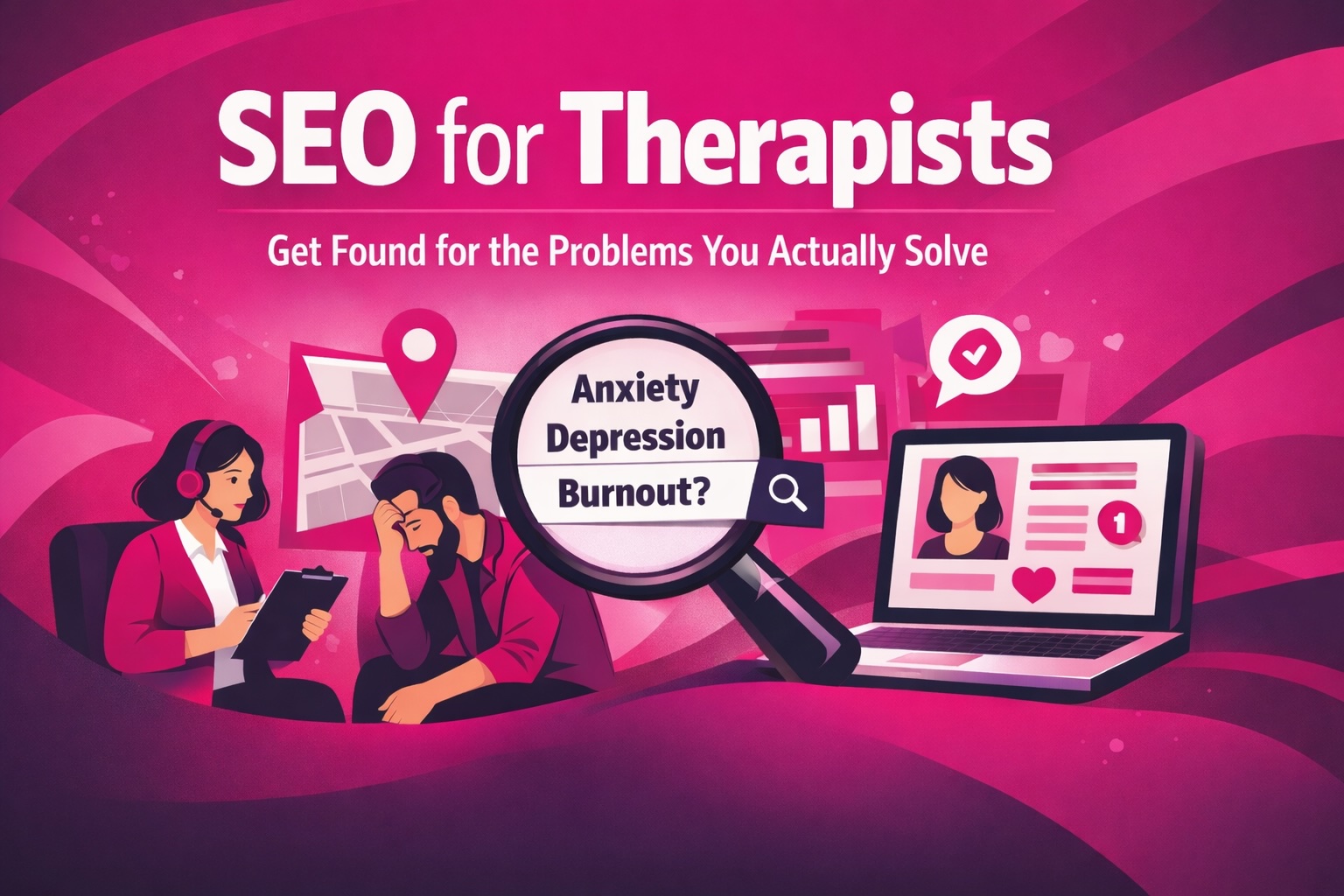
That’s partly professional. Psychotherapists, counsellors, hypnotherapists, health and wellbeing coaches regularly come to me asking about SEO and visibility.
But it’s personal too.
Like a lot of people, therapy has been part of my life outside of work. I’ve sat on both sides of the room. I know how much trust is involved, how vulnerable that first step can feel, and how important it is to feel understood before you even make contact.
Good people. Properly trained. Doing meaningful work.
And a surprising number of them have the same problem.
Their websites are… fine.
Nice enough. Calm colours. Gentle language. All very “safe”.
But invisible.
Not because SEO is hard.
Not because Google is broken.
And not because they need to become marketing experts.
It’s usually because they’re being far too abstract.
They’re talking about who they are and how they work, but not enough about what they actually help people with.
And that’s where SEO for therapists tends to fall over.
The uncomfortable truth about how people search
Here’s the bit that often feels awkward.
People don’t search for therapy the way therapists talk about therapy.
No one sits at home at 11pm and types:
“integrative therapeutic support for personal growth”
They type:
“why do I feel anxious all the time”
“panic attacks out of nowhere”
“can’t sleep mind racing”
“feel low for no reason”
“burnt out but still functioning”
They search for symptoms. Feelings. Problems. Pain.
Google’s job is to match those searches with pages that clearly, calmly, and helpfully address them. If your site stays vague, Google has nothing solid to work with. And neither does the person reading it.
Why being vague hurts both SEO and trust
A lot of therapist websites lead with lines like:
“I help people reconnect with themselves”
or
“Supporting you on your journey”
That might feel aligned with your values. I get it.
But from an SEO point of view, it’s a dead end.
From a human point of view, it can be confusing too.
Someone struggling with anxiety, depression, trauma, or burnout is often already overwhelmed. They’re scanning. Looking for reassurance. Trying to work out:
“Do you deal with my thing?”
If they can’t quickly see themselves reflected in your words, they move on. Quietly. No enquiry. No call.
The simple mindset shift that changes everything
Here’s the shift I always suggest.
Stop starting with you.
Start with them.
More specifically: start with the problems you help people solve.
This is exactly the thinking behind how I approach
SEO for therapists
in practice – clarity first, tactics second. When the messaging is right, the SEO becomes much simpler.
The “symptom to session” way of thinking
A simple exercise that works surprisingly well.
Make a list of 8 to 12 issues you genuinely work with.
Not therapy types. Not modalities. Issues.
For example:
anxiety
panic attacks
low mood or depression
burnout
grief
trauma
sleep problems
confidence and self-esteem
relationship patterns
Now ask:
“What does this actually feel like for someone living with it?”
Anxiety isn’t a concept. It’s:
a tight chest
constant what-if thoughts
never fully relaxing
feeling on edge for no obvious reason
That language matters. Because that’s what people recognise. And that’s what they search for.
Those issues deserve their own pages.
Why “issue pages” are the biggest SEO win for therapists
If you only take one thing from this article, take this.
Dedicated pages for the issues you help with are where most therapist sites miss a trick.
A strong issue page does three things:
1. It matches what people search for
2. It reassures them you understand their experience
3. It gently explains how working with you might help
From an SEO point of view, these pages are gold – especially for local SEO, where intent is high and competition is often lower than people think.
What an effective issue page actually looks like
You don’t need to overthink this.
A solid structure might look like this:
A clear headline:
“Anxiety Therapy in Brighton”
or
“Online Therapy for Anxiety”
Then:
• What it can feel like (plain English)
• Common patterns or symptoms
• How therapy can help support this
• How you work and what sessions are like
• Who it’s for (and who it might not be for)
• Practical details: location, online options, fees
• A clear next step
This aligns perfectly with the kind of on-site SEO basics that consistently work for small, local businesses – clarity, relevance, and structure.
Keep your site structure simple and calm
SEO doesn’t mean a complicated website.
For most therapists, this works well:
• Homepage
• About
• Issues I Help With
• Services or Approach
• Fees
• Contact / Book
The “Issues I Help With” section is where the real SEO work happens.
Each issue gets its own page. That’s it.
You don’t need dozens. You don’t need to blog every week. You just need to clearly cover what you actually do.
Local SEO: what really matters for therapists
If you work locally, your Google Business Profile matters more than most people realise.
It’s often the first thing someone sees before they even reach your website.
Make sure:
• Your details are accurate
• Your category is correct
• Your description is specific
• You’ve added photos
• Your availability makes sense
If you want the broader version of this (without the jargon), you can also read:
Local SEO tips.
Trust signals aren’t optional in therapy SEO
Because therapy sits in health and wellbeing, Google holds this content to a higher standard.
Your site should clearly show:
• Who you are
• Your qualifications and registrations
• Your approach, explained simply
• Clear contact details
• Sensible boundaries and language
This isn’t about pleasing an algorithm. It’s about being trustworthy to the person reading your site.
A few SEO basics that actually matter
You don’t need to become an SEO nerd.
But these basics help more than people expect:
• Clear page titles that describe the page
• Logical headings
• Natural internal links between related pages
• Fast-loading images
• A site that works properly on mobile
If you’re unsure whether your site is getting these right, that’s exactly what a
free SEO audit
is useful for – not to overwhelm you, just to highlight the obvious gaps.
Content ideas that don’t feel like marketing
If you do write content, think explanation, not promotion.
Things like:
“What anxiety feels like in the body”
“High-functioning burnout”
“Why your mind won’t switch off at night”
“Why the same relationship patterns keep repeating”
These support your issue pages and help people feel understood before they ever contact you.
A realistic 30-day plan
If you wanted to approach this calmly:
Week one
List your issues and tighten your homepage language
Week two
Create two or three solid issue pages
Week three
Tidy your Google Business Profile
Week four
Add one or two supporting articles and link things together sensibly
No heroics. Just progress.
Final thought
SEO for therapists isn’t about tricks.
It’s about clarity.
When you clearly describe the problems you help with, using language real people recognise, Google usually follows.
More importantly, the right people find you.
If you want someone to sanity-check your structure, messaging, or issue pages, that’s exactly what I do. And if not, you’re already in a much stronger position than most therapist websites online.
Clear beats clever. Every time.